natural heaven
FORESTS OF JAPAN
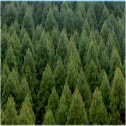 Why are the japanese so proud of their baths and hot springs? A HINOKI bathtub is ideal for a provides a full sensory experience: beautiful white cedar with a rich grain, smooth texture, soothing lemony fragrance, and the warm comfort of soaking away all the tension and stress of the day.
WOOD CULTURE
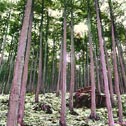 When we talk about Japanese dwellings and lifestyle, its association with the culture of wood is almost automatic. Still today most of private homes are built with a wood post-beam structure. Wood is used to manufacture cooking utensils, shoes, children`s toys. And of course, bathstubs. The remarkably straight SUGI might be best choice for buildings, as the SAKURA (cherry) is for producing objects or the MATSU (pine) is for panels and doors. But wood bathtubs are only made in HINOKI, the wood of the 1300 years old Horyuji Temple in Nara, the wood chosen by the emperors…
THE EMPEROR OF WOODS
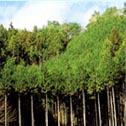 As hinoki trees suffer polluted environments, they grow mainly in "virgin" areas, where the air and water are pure. Aomori and Ishikawa in the north, Gifu prefecture, the Kiso Valley in the Chubu district and the Kochi prefecture in Shikoku are the regions with largest hinoki forests. This "purity" reflects in the wood’s appearance : light-colored, has a rich but compact straight grain. A natural clear resin permeates homogeneously the pores thus creating a natural protection against insects and rot. When cut or scrubbed, hinoki wood emanates a pleasing lemon scent for which it is famous.
Leave a Comment